 | ||
 | Running a successful campaign for public office is fraught with obstacles. Come to Pittsburgh – the City of Bridges – and learn what it takes to beat those challenges and win. After all, it's also the City of Champions. Apply now for our Candidate and Campaign Training – the deadline is this week. Openly LGBT candidates are running – and winning – more than ever, giving the LGBT community a voice in local, state and federal politics. Whether you're ready to run or just interested in helping an LGBT candidate win, now's the time to get the skills you need to cross the bridge to victory. As Luke Clippinger, one of the newest openly LGBT members of the Maryland House of Delegates, said, "The Candidate and Campaign Training was a turning point for me. It was like a light bulb going on and it helped me organize and plan a much more effective campaign. If you're considering working in politics as a candidate or campaign staffer, you shouldn't miss this training." Can't make it to Pittsburgh? Don't worry, there's still time to prepare for 2012 by attending a training in Chicago or Houston later this year. Apply now and join us June 2 to 5 in Pittsburgh, Pa. | |
| Paid for and authorized by the Gay & Lesbian Leadership Institute. Contributions or gifts are tax-deductible to the fullest extent of the law. 1133 15th Street, NW, Suite 350, Washington, DC 20005 | ||
Tuesday, May 3, 2011
No train, no gain


48 hours to make history in Brazil

Dear friend, On May 18 thousands of activists will march on Brazil’s capital in the largest day of action against hate crimes and homophobia in Brazil's history. This is a key opportunity to show Brazil's political leaders that people everywhere are demanding urgent action to end the escalating hate and violence. Can you join the day of action by submitting a photo of yourself holding a sign urging the passage of PLC122? If you submit your photo by Thursday morning, we will include it as part of a massive and powerful visual projection of supporters from around the world pushing for action in the heart of Brazil's capital. Submitting a photo only takes a moment and the more of us who participate, the louder our voice will be. www.allout.org/brazil There are three simple steps: 1. Print out a sign HERE (Or make your own: Make sure it says: “The Time is Now. Pass #PLC122") 2. Take a quick photo of yourself holding the sign. 3. Email it to us here: images@allout.org This law won't erase homophobia on its own, but it will send a powerful message that LGBT Brazilians are equal in the eyes of the law, deserving of the same rights and protection from targeted violence as anyone else. It’s an exciting moment for Brazil, and for the broader LGBT equality movement around the world. It’s never been easier to join with thousands of others to make a difference. A month ago we shared the story of Priscila Brandão, a young trans woman gunned down at point blank range on the street in Brazil. Priscila’s tragic death shows why Brazil—a country with one of the highest rates of violent homophobic and transphobic attacks and murders in the world—needs to take action right away. Almost 100,000 of you signed the a letter in partnership with our friends at Avaaz.org, asking President Dilma Rousseff and the Brazilian Parliament to prioritize passage of the ambitious Anti-Homophobia and Hate Crimes law (PLC122). Let’s take this campaign to the next step and turns those names into faces that can’t be ignored. www.allout.org/brazil All best and All Out, Andre, Erika, Guillaume, Jeremy, Joseph, Prerna, Nita, Oli, Tile, Wesley and the rest of the team at All Out P.S. Don't miss your chance to be up on the big screen! www.allout.org/brazil All Out is bringing people together in every corner of the planet and of every identity - lesbian, gay, straight, transgender and all that’s between and beyond - to build a world in which everyone can live freely and be embraced for who they are. SOURCES: www.allout.org/priscila 2ª Marcha Nacional contra a Homofobia - 2º Grito Nacional pela Cidadania LGBT e Contra a Homofobia http://www.abglt.org.br/port/marcha.php Anti-Homophobia Law: PLC122 http://www.plc122.com.br/ A trans woman is killed by 9 shots on Afonso Pena Avenue (Portuguese) http://www.em.com.br/app/noticia/gerais/2011/03/02/interna_gerais,212936/travesti-e-morto-com-nove-tiros-na-afonso-pena.shtml Homophobic hate crimes spreading throughout Brazil http://blog.amnestyusa.org/iar/homophobic-hates-crimes-spreading-throughout-brazil/ National Library of Brazil http://www.pbase.com/drasko/image/84468689 http://www.avaaz.org/po/homofobia_nao?fp | |


A new low by the Prop. 8 defense. Fight back.
| May 3, 2011 | ||||
 | ||||
| Dear Terrence L, The Proponents of Prop. 8 have launched a new, multi-pronged attack to defend discrimination and bigotry. We saw their true stripes during the horrific campaign that stripped the freedom to marry from gay and lesbian Californians. Now, they have reached a new low. They have filed two insidious motions. One is a blatantly homophobic attempt to throw out the historic decision that ruled Prop. 8 unconstitutional because the judge who presided over the case was gay. The other demands that the court forever conceal the video recording of the Prop. 8 trial. We need to fight back and expose them for who they really are. They are looking for every attempt to discredit a sound judicial proceeding and put the video evidence of their inept arguments under lock and key, hidden from public view. It is said that sunlight is the greatest disinfectant. I know that if the American people can see the video of the trial first hand, if they can see how absurd their arguments really are and how little evidence they produce, they will realize that there is no rational reason for denying loving gay and lesbian couples the freedom to marry. Please join me in signing an open letter asking the court to release the Prop. 8 tapes. When you sign the letter, you’ll be joining a group of people who believe that everyone should have the freedom to marry. The American Foundation for Equal Rights is the organization behind the federal challenge to Prop. 8. They brought together one of the best legal teams in the country, led by former Bush v. Gore adversaries Theodore B. Olson and David Boies. Representing the politics of the left and the right, this dynamic duo is proving that marriage is not an issue that divides, but an American value that unites. As a board member of this great organization, I know AFER is holding the anti-equality, anti-marriage forces accountable – fighting them both in the court of law and in the court of public opinion. But we need your help. If you believe in transparency and equality, sign AFER’s open letter asking the court to release the Prop. 8 tapes. Together, we will right the horrible wrong imposed by Prop. 8 – for the loving couples who are currently denied their constitutional right to marry, for the lesbian, gay, bisexual and transgender youth who are shunned because their own government does not recognize them as equal, and for everyone who believes that our great country was founded on the simple principle of equality for all. Sincerely, Dustin Lance Black Academy Award-winning screenwriter, director and AFER board member  |
| |||
Connect with us on  Facebook and Facebook and  Twitter The American Foundation for Equal Rights is dedicated to protecting and advancing equal rights for every American. As the sole sponsor of Perry v. Schwarzenegger, the federal court challenge of Proposition 8, AFER is leading the fight for marriage equality nationwide and building public support for the freedom to marry for gay and lesbian Americans. For more information visit www.AFER.org Twitter The American Foundation for Equal Rights is dedicated to protecting and advancing equal rights for every American. As the sole sponsor of Perry v. Schwarzenegger, the federal court challenge of Proposition 8, AFER is leading the fight for marriage equality nationwide and building public support for the freedom to marry for gay and lesbian Americans. For more information visit www.AFER.org | ||||

Kris and Sandy from American Foundation for Equal Ri on Vimeo.
Haven't They Waited Long Enough?
 | |
| |
|

J.Crew Dares to Photograph a Gay Couple Under the Headline ‘Happy Together’ for a New Catalogue

J. Crew surprised consumers again with a May 2011 catalog that features its employees as models, including a gay designer with his boyfriend, who are described as "Happy Together."
The preppie clothing giant was quiet on its presentation of the same-sex couple -- "Our designer Somsack and his boyfriend, Micah" -- but gay advocates applaud what they say is a strong message.
"Nothing is unintentional in this kind of marketing," said Cathy Renna of Renna Communications, which serves the LGBT community. "Bravo to J. Crew."
"It's a giant step forward," she said. "As an activist, it's great to see a diversity of images and to see gay families represented in more regular media."
Just last month, J. Crew stirred controversy when its online newsletter included an image of its president and creative director Jenna Lyons painting her son's toenails hot pink.
"Lucky for me I ended up with a boy whose favorite color is pink," said the caption. "Toenail painting is way more fun in neon."
Social conservatives reacted with outrage at what they considered "liberal, transgendered identity politics." Some critics suggested that her son Beckett might be "turned" gay or transgender.
"The Men's Shop" section in the back of the 135-page catalog includes J. Crew's in-house stylist with his 9-month-old son, bearded brothers, a designer with his dog and also the photographer's African-American husband and their Asian daughter, headlined as "Family Matters."
A spokesperson for J. Crew told ABCNews.com that the company did not want to comment on what some saw as a new rainbow campaign.
More American companies recognize the consumer buying power of the lesbian, gay, bisexual community. According to a report in the online magazine Treasury and Risk, their spending will exceed $769 billion this year.
Now, J.Crew seems to have jumped on the bandwagon, according to advertising experts.
"I am loving it," said Bob Witeck, CEO of Witeck Combs, a public relations and marketing firm that specializes in LGBT clients.
"Abercrombie and Fitch have gotten away with selling around men without clothes and they never told us how they were related to each other," he said. "Obviously, it's time to bring them out and it's exciting."
Witeck said the image "does not sexualize nor exceptionalize this couple in any way."
J. Crew's appproach "suggests they are updating and speaking to a more youthful and more self-aware audience that wants to see the truth and complexity and authenticity about every identity," said Witeck.
J. Crew Imagery Reflects a Diverse World
Gays were early adopters of the Internet and social networking, first using chat rooms to connect with others. Now, they have a disproportionately high presence on Facebook.In the past, advertising has used a "stock gay photography," according to Witeck. "There's a joke about gay ad imagery -- they think the same couple banks at every bank."
J. crew designer and model Somsack Sikhounmuong is Asian and his boyfriend Micah is white.
"This is new -- you're not seeing this all over the place," Witeck said. "More multiracial images push back the monochromatic [image] of the white gay man."
Some companies have had a long tradition of targeting the LGBT market, most notably American Airlines, which offers equal benefits for same-sex partners and has strong diversity policies.
The company was among early sponsors of the GLAAD Media Awards. The airlines boldly ran a 2010 billboard ad in New York City's predominantly gay neighborhood: "Here's to his and his beach towels."
Two others -- Subaru and Kimpton Hotels -- have been supportive. And the LGBT community, it turn, shows strong brand loyalty, he said.
"We are incredibly loyal and informed," said PR guru Renna. "I don't fly on any airlines except American and Jet Blue. "They have good policies. I tend to support these products even if they cost more."
But advertising to this niche market can be tricky. "It's important not to pander and to get it right," said Witeck.
As for J. Crew, he said, "I do think they got it right."

Man arrested over murder of US gay pride activist

Police in Elmira, New York state, have arrested a man in connection with the murder of a local gay rights activist, Clinton ‘Billy’ Lewis, who was also the owner of Club Chill, a local gay bar.
Police say that they responded to reports of gun fire and located Lewis inside his home, which is a few blocks from the gay bar he owned.
Louis M Duffy of Horseheads, New York state, has been charged with second degree murder and held in remand. No details of the motive have been made available to the media.
Lewis helped organise gay pride events in the town.
Study Offers Insight into Black MSM HIV Rates
 By Kilian Mellloy -
Black men who have sex with men (MSM) are up to five times more likely to contract HIV than other MSM. A new study offers insights into the disparity, a release from Johns Hopkins Medical Institutions News Medical.net article said.
The release was carried at multiple online health sites.
One puzzling aspect regarding the higher rate of HIV infection among black MSM is that the demographic practices safer sex at comparable rates to other groups. Johns Hopkins researchers have determined that a number of factors may account for the higher HIV rates, including how black men who have sex with men--including gay men, bisexuals, and heterosexuals who do not regard themselves as gay or bi despite their same-gender sexual conduct--choose their partners and judge the risks involved.
"These men show a clear preference for masculine men, while also equating masculinity with lower HIV risk," the News Medical.net story said. "This dynamic, the researchers say, can help explain why young black MSM contract HIV more often than their counterparts from other races."
The perception that "masculine" men are less likely to carry HIV, coupled with the choice to leave decisions regarding condom use to the discretion of the partner rather than insisting upon it, help account for the disparity in HIV rates, the study’s authors suggested.
"There may be no difference in HIV prevalence between masculine-looking and feminine-looking men, but because black MSM perceive masculine men as lower risk, their sexual encounters with such men may make HIV infection more likely," Johns Hopkins Children’s Center’s Jonathan Ellen said.
"In other words, even though young black MSM have unprotected sex just as often as others, they may be having unprotected sex in riskier ways with partners whose HIV status they often miscalculate, the researchers explain," the News Medical.net story reported.
The new insights offered by the study suggest new avenues for outreach and education, including how physicians discuss sexual health with their patients, the article said.
The study, titled "Young Black Males’ Conflict between Masculinity and Homosexuality: Implications for HIV Risk," also suggested that young black MSM struggle with cultural demands that increase the fear of rejection and isolation based on sexuality.
"As a result of the conflict between homosexuality and cultural expectations of masculinity, young Black MSM may experience--or fear they will experience--rejection from important social supports," the study said. "This conflict may further isolate them during a developmental stage when interpersonal attachments are critical.
"These findings have important implications for HIV risk, as lack of social support has been associated with increased HIV risk behavior," the study added. "The potential for social isolation engendered by the conflict between homosexuality and cultural expectations is important to consider in HIV prevention strategies directed towards young Black MSM."
The study said that its "findings suggest there are more complex factors affecting the risk of exposure to an infected partner. One such factor may be the conflict between homosexuality and race-specific conceptions of masculinity."
A study released last year by the Centers for Disease Control and Prevention (CDC) that focused on 21 cities around the country found that 1 in 5 MSM are HIV+, and noted that young black MSM may have a higher rate of not knowing their HIV status. That study indicated that 28% of black MSM were HIV+, as compared to 18% of Hispanic MSM. The rate for Caucasian MSM was found to be 16%.
The presentation of the new Johns Hopkins study and its results took place at this year’s Annual Meeting of the Pediatric Academic Societies, which continues through May 3 in Denver, Colo.
The release was carried at multiple online health sites.
One puzzling aspect regarding the higher rate of HIV infection among black MSM is that the demographic practices safer sex at comparable rates to other groups. Johns Hopkins researchers have determined that a number of factors may account for the higher HIV rates, including how black men who have sex with men--including gay men, bisexuals, and heterosexuals who do not regard themselves as gay or bi despite their same-gender sexual conduct--choose their partners and judge the risks involved.
"These men show a clear preference for masculine men, while also equating masculinity with lower HIV risk," the News Medical.net story said. "This dynamic, the researchers say, can help explain why young black MSM contract HIV more often than their counterparts from other races."
The perception that "masculine" men are less likely to carry HIV, coupled with the choice to leave decisions regarding condom use to the discretion of the partner rather than insisting upon it, help account for the disparity in HIV rates, the study’s authors suggested.
"There may be no difference in HIV prevalence between masculine-looking and feminine-looking men, but because black MSM perceive masculine men as lower risk, their sexual encounters with such men may make HIV infection more likely," Johns Hopkins Children’s Center’s Jonathan Ellen said.
"In other words, even though young black MSM have unprotected sex just as often as others, they may be having unprotected sex in riskier ways with partners whose HIV status they often miscalculate, the researchers explain," the News Medical.net story reported.
The new insights offered by the study suggest new avenues for outreach and education, including how physicians discuss sexual health with their patients, the article said.
The study, titled "Young Black Males’ Conflict between Masculinity and Homosexuality: Implications for HIV Risk," also suggested that young black MSM struggle with cultural demands that increase the fear of rejection and isolation based on sexuality.
"As a result of the conflict between homosexuality and cultural expectations of masculinity, young Black MSM may experience--or fear they will experience--rejection from important social supports," the study said. "This conflict may further isolate them during a developmental stage when interpersonal attachments are critical.
"These findings have important implications for HIV risk, as lack of social support has been associated with increased HIV risk behavior," the study added. "The potential for social isolation engendered by the conflict between homosexuality and cultural expectations is important to consider in HIV prevention strategies directed towards young Black MSM."
The study said that its "findings suggest there are more complex factors affecting the risk of exposure to an infected partner. One such factor may be the conflict between homosexuality and race-specific conceptions of masculinity."
A study released last year by the Centers for Disease Control and Prevention (CDC) that focused on 21 cities around the country found that 1 in 5 MSM are HIV+, and noted that young black MSM may have a higher rate of not knowing their HIV status. That study indicated that 28% of black MSM were HIV+, as compared to 18% of Hispanic MSM. The rate for Caucasian MSM was found to be 16%.
The presentation of the new Johns Hopkins study and its results took place at this year’s Annual Meeting of the Pediatric Academic Societies, which continues through May 3 in Denver, Colo.
Kilian Melloy reviews media, conducts interviews, and writes commentary for EDGEBoston, where he also serves as Assistant Arts Editor.
BYU Researchers Hope Twins Unlock AIDS Mysteries

Researchers at Brigham Young University are trying to unlock some of the mysteries surrounding the virus that causes AIDS with a trio of studies addressing unusual cases involving a set of twins, a failed vaccine and a protein "stop sign."
The twin identical baby boys received a tainted transfusion and both became HIV-positive a few years ago.
Now, one of the twins has a near-normal immune system and pretty good health, while the other boy is five years behind him on the growth chart and has experienced a number of complications.
That provocative difference became the foundation of one of the studies, as researchers led by BYU biology department chairman Keith Crandall try to figure out how the virus changed in each twin. They’ve been joined in the study by scientists at the National Cancer Institute.
Crandall said there are competing theories about the differences in their clinical outcomes. One theory is that natural selection drives it, so the results should be similar. The other holds that random genetics plays a role and it therefore cannot be predicted.
A second study focuses on an HIV vaccine scientists in Thailand were trying to develop that proved ineffective. Crandall said they hope samples from that case will help them learn more about how the virus evolved and whether vaccinations to guard against HIV show promise.
"I think the HIV community is still split in terms of how to pursue treatment against HIV infection," Crandall told the Deseret News.
"There is a strong camp that thinks vaccine is still the way to go. We need to do more intelligent vaccine design," carefully considering everything they’ve learned in other attempts to create a vaccine that works.
"Others say no way," he said. "The focus needs to be on drug therapy. But the virus tends to hide out in places where drugs can’t get to them."
The final study is led by Greg Burton, chairman of BYU’s Department of Chemistry and Biochemistry, and Xueyuan Zho, a student at the University of Colorado’s Health Sciences department. They confirmed an earlier report that a naturally occurring protein prevents HIV from multiplying. But they’ve gone further to explain how the protein works, not just what happens.
"The importance of this study is that we moved ahead from earlier research. The effect was known, but we showed the mechanism," Burton said.
The twin identical baby boys received a tainted transfusion and both became HIV-positive a few years ago.
Now, one of the twins has a near-normal immune system and pretty good health, while the other boy is five years behind him on the growth chart and has experienced a number of complications.
That provocative difference became the foundation of one of the studies, as researchers led by BYU biology department chairman Keith Crandall try to figure out how the virus changed in each twin. They’ve been joined in the study by scientists at the National Cancer Institute.
Crandall said there are competing theories about the differences in their clinical outcomes. One theory is that natural selection drives it, so the results should be similar. The other holds that random genetics plays a role and it therefore cannot be predicted.
A second study focuses on an HIV vaccine scientists in Thailand were trying to develop that proved ineffective. Crandall said they hope samples from that case will help them learn more about how the virus evolved and whether vaccinations to guard against HIV show promise.
"I think the HIV community is still split in terms of how to pursue treatment against HIV infection," Crandall told the Deseret News.
"There is a strong camp that thinks vaccine is still the way to go. We need to do more intelligent vaccine design," carefully considering everything they’ve learned in other attempts to create a vaccine that works.
"Others say no way," he said. "The focus needs to be on drug therapy. But the virus tends to hide out in places where drugs can’t get to them."
The final study is led by Greg Burton, chairman of BYU’s Department of Chemistry and Biochemistry, and Xueyuan Zho, a student at the University of Colorado’s Health Sciences department. They confirmed an earlier report that a naturally occurring protein prevents HIV from multiplying. But they’ve gone further to explain how the protein works, not just what happens.
"The importance of this study is that we moved ahead from earlier research. The effect was known, but we showed the mechanism," Burton said.
How Many Gays Must God Create Before We Accept That He Wants Them Around?
Representative Steve Simon (DFL Hopkins/St. Louis Park) says a proposed Minnesota constitutional amendment is about religion and not anything else. He says if sexual orientation is innate as science is showing us, and not a lifestyle choice, then God created gay people. He asks how many gay people must God create before we accept that he wants them around.
Monday, May 2, 2011
Brooke Vincent lashes out at British PM Cameron

CORRIE star Brooke Vincent has lashed out at the Prime Minister over plans to ban gay kisses on TV until after the watershed.
The 18-year-old, who plays lesbian Sophie Webster on the ITV1 soap, accused the PM of not supporting equality.Writing on Twitter, Brooke said: "I swear David Cameron's meant to be supporting equal rights. I just think if same-sex kisses are what he is prioritising and concentrating on changing, our country's in trouble."
Brooke's comments follow a report that a ban on pre-watershed same-sex kisses may be recommended by an independent review - backed by the Prime Minister.
Gay asylum claims not being counted despite pledge, admit ministers
Lack of data means Home Office unclear whether applicants are still being deported to countries where they risk persecution
By Karen McVeigh -
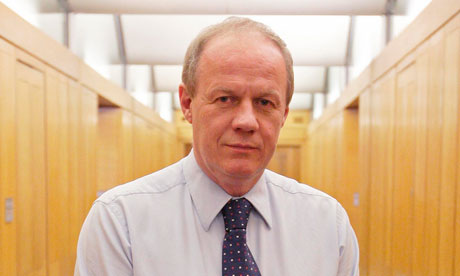 |
Immigration minister Damian Green says the number of asylum applications based on sexual orientatioin could 'only be obtained through examination of individual case records at a disproportionate cost'. |
By Karen McVeigh -
Ministers have admitted they are failing to collect data on the number of people who claim or are refused asylum on the basis of their sexuality, despite a government promise not to deport lesbians and gay men at risk of persecution.
The lack of statistics means the government does not know whether gay and lesbian asylum seekers are still being deported to countries where they may face imprisonment, torture or execution. It is also unable to say whether new rules, brought in after a supreme court ruling that marked an end to Britain refusing asylum to gay men and lesbians on the grounds they could hide their sexuality by living discreetly, are being breached.
In that July ruling, welcomed by Theresa May, the home secretary, one judge described how homophobia had "dramatically worsened" in countries such as Uganda, Malawi and Iran, making it necessary to allow those at risk protection in Britain.
The UK Border Agency was told by the Home Office last year that the new rules should be applied "with immediate effect" and that relevant cases should be "flagged and recorded".
But more than six months on, the government still does not know how many cases they are dealing with, let alone whether the ruling is being followed.
Last week, the US secretary of state, Hilary Clinton, launched her department's 35th Human Rights report, which cited a Stonewall report drawing attention to "significant disadvantages" experienced by lesbian and gay asylum seekers in Britain. The UK chapter in the US state department report said: "Stonewall claimed that, by 'fast tracking' these more complex cases and denying them quickly, UKBA staff did not give applicants time to talk openly about their sexual orientation."
The campaign group found that, in the period between 2005-2009 almost all gay and lesbian asylum seeker claims were initially refused, compared with a 76% refusal rate among all asylum seekers, and were more likely to be fast tracked, which meant applicants and their lawyers had much less time to prepare an appeal.
Following accusations of "institutional homophobia", the UKBA has taken steps to address criticisms, including training case workers in dealing with such claims. Lesbian and gay asylum support groups said that the lack of centrally held official figures means they are unable to track whether any progress is being made.
Erin Power of the UK Lesbian and Gay Immigration Group said: "This makes it impossible to say anything at all about LGBT [lesbian, gay, bisexual and transgender] claims because we don't know whether they are granting asylum. An awful lot of work and money has gone into improving the approach to LGBT claims.
"What worries us is people who were refused prior to the supreme court decision. In these cases, we know the countries they are being sent back to are dangerous. If they are picked up as failed asylum seekers, no one is checking whether they were told to be discreet. We've no idea how many people there are."
In what she described as a "worrying" development, following the ruling, it is becoming more difficult for asylum seekers to "prove" to the authorities that they are homosexual.
"It has always been difficult to prove but more frequently now, people are not being believed."
Steve Symonds, the legal officer of Immigration Law Practitioners Association, said: "We are aware of cases where the Home Office and the courts have refused people asylum on the basis which we know now to be wrong.
"The sensible thing to do would be to review cases of removal. When you get to a point where you have to put someone on a plane for removal, you should get their file out and make sure there's nothing of concern. They should check they have not claimed on the grounds of being gay, because they know that there was an important decision in the court which may be relevant."
In at least one immigration case, last month, involving a woman they believed was a lesbian from Uganda, Home Office lawyers argued that there was no persecution of lesbians in there and that she could be safely returned if she lived discreetly. But a judge ruled that living openly as a lesbian would expose her to persecution and granted her leave to remain.
In response to a parliamentary question asking how many lesbian and gay asylum seekers had been granted or refused asylum since July, Damian Green, the immigration minister, said: "The information requested in the questions is not recorded centrally by the UK Border Agency and can only be obtained through examination of individual case records at a disproportionate cost."
A UKBA spokesperson said: "The UK Border Agency does not currently record separate statistics on the grounds on which individuals claim asylum.
"We are, however, reviewing how data on sexual orientation cases can be recorded more effectively and whether any resulting data can be published."
The lack of statistics means the government does not know whether gay and lesbian asylum seekers are still being deported to countries where they may face imprisonment, torture or execution. It is also unable to say whether new rules, brought in after a supreme court ruling that marked an end to Britain refusing asylum to gay men and lesbians on the grounds they could hide their sexuality by living discreetly, are being breached.
In that July ruling, welcomed by Theresa May, the home secretary, one judge described how homophobia had "dramatically worsened" in countries such as Uganda, Malawi and Iran, making it necessary to allow those at risk protection in Britain.
The UK Border Agency was told by the Home Office last year that the new rules should be applied "with immediate effect" and that relevant cases should be "flagged and recorded".
But more than six months on, the government still does not know how many cases they are dealing with, let alone whether the ruling is being followed.
Last week, the US secretary of state, Hilary Clinton, launched her department's 35th Human Rights report, which cited a Stonewall report drawing attention to "significant disadvantages" experienced by lesbian and gay asylum seekers in Britain. The UK chapter in the US state department report said: "Stonewall claimed that, by 'fast tracking' these more complex cases and denying them quickly, UKBA staff did not give applicants time to talk openly about their sexual orientation."
The campaign group found that, in the period between 2005-2009 almost all gay and lesbian asylum seeker claims were initially refused, compared with a 76% refusal rate among all asylum seekers, and were more likely to be fast tracked, which meant applicants and their lawyers had much less time to prepare an appeal.
Following accusations of "institutional homophobia", the UKBA has taken steps to address criticisms, including training case workers in dealing with such claims. Lesbian and gay asylum support groups said that the lack of centrally held official figures means they are unable to track whether any progress is being made.
Erin Power of the UK Lesbian and Gay Immigration Group said: "This makes it impossible to say anything at all about LGBT [lesbian, gay, bisexual and transgender] claims because we don't know whether they are granting asylum. An awful lot of work and money has gone into improving the approach to LGBT claims.
"What worries us is people who were refused prior to the supreme court decision. In these cases, we know the countries they are being sent back to are dangerous. If they are picked up as failed asylum seekers, no one is checking whether they were told to be discreet. We've no idea how many people there are."
In what she described as a "worrying" development, following the ruling, it is becoming more difficult for asylum seekers to "prove" to the authorities that they are homosexual.
"It has always been difficult to prove but more frequently now, people are not being believed."
Steve Symonds, the legal officer of Immigration Law Practitioners Association, said: "We are aware of cases where the Home Office and the courts have refused people asylum on the basis which we know now to be wrong.
"The sensible thing to do would be to review cases of removal. When you get to a point where you have to put someone on a plane for removal, you should get their file out and make sure there's nothing of concern. They should check they have not claimed on the grounds of being gay, because they know that there was an important decision in the court which may be relevant."
In at least one immigration case, last month, involving a woman they believed was a lesbian from Uganda, Home Office lawyers argued that there was no persecution of lesbians in there and that she could be safely returned if she lived discreetly. But a judge ruled that living openly as a lesbian would expose her to persecution and granted her leave to remain.
In response to a parliamentary question asking how many lesbian and gay asylum seekers had been granted or refused asylum since July, Damian Green, the immigration minister, said: "The information requested in the questions is not recorded centrally by the UK Border Agency and can only be obtained through examination of individual case records at a disproportionate cost."
A UKBA spokesperson said: "The UK Border Agency does not currently record separate statistics on the grounds on which individuals claim asylum.
"We are, however, reviewing how data on sexual orientation cases can be recorded more effectively and whether any resulting data can be published."
Should Gay Educators Come Out In Class?
Coming out of the closet at work is difficult, but when your job involves children, being openly gay can be even tougher. Steve Perry talks with Tom Greene (Chapel Hill High School), Robert McGarry (Gay, Lesbian & Straight Education Network) & Danielle Riley (Jordan High School).
In Australia, Agrent tells Gillard: 'I expect better'

“I expect better.” That’s the message Queensland mother Shelley Argent is sending to politicians with her new equal rights campaign.
Taking inspiration from the highly-successful ‘It Gets Better’ project, the online campaign urges people from the GLBT community, as well as their friends and families, to upload videos on YouTube calling on politicians and political groups to support marriage equality.
Argent, the mother of a gay child and a staunch supporter of equal rights, said the aim of the campaign was to continue applying pressure on politicians by keeping the issue of marriage equality in the spotlight.
“This is another way of getting the message out to Canberra,” Argent told SX. “It is time for equality. As a parent, I do expect better from the government on what my son is actually getting at the moment. As a parent, I can give my child the best education and the best parenting. I can cover every want or need. But it doesn’t matter how much money you’ve got, you can’t buy them their equality. And it doesn’t matter what they do, they cannot earn their equality. And so I think this is another way of saying to everyone, ‘It’s time to stand up and speak out’.
In her launch video, Argent offers a message to Julia Gillard.
“Ms Gillard, it’s hard to respect someone who uses religion and tradition as an excuse for discrimination,” Argent says in her video.
“Remember it was once tradition that as a married female, we automatically became the husband’s property and generally had limited rights, including the right to vote, let alone become our country’s first female prime minister choosing to live in a de facto relationship. It’s time to stop ignoring pro-marriage equality groups who are trying to show you their side of the story and the effects your inaction is having on same-sex attracted couples.
“They just want the same choices you and I have.”
Sunday, May 1, 2011
Archie Comics' Kevin Keller: Gay Son of a Loving, Military Dad

Though CBR isn’t a gay blog, Kevin Melrose posted an insightful look at the liberal-commie-homosexual-agenda (Re: openly gay comic book character Kevin Keller) going on in the pages of Archie Comics over at Comic Book Resources.
While Marvel and DC are both home to critically acclaimed gay characters – Young Avengers’ Wiccan & Hulkling and the new Batwoman, Kate Kane respectively spring to mind – it’s surprisingly been Archie Comics that has achieved the most media attention for it’s gay posterboy, Kevin Keller.
Or maybe its not surprising at all, considering Archie Comics’ fictional every-town, Riverdale’s ideological utopian place in conservative minds. The Riverdale baby boomers grew up reading was host to hamburger-eating contests, malt shoppes, and the most vanilla love triangle in the history of the printed world between Betty Cooper, Archie Andrews, and Veronica Lodge.
Those plot points all still exist, but now a gay teen named Kevin Keller is counted among the Riverdale gang’s nearest and dearest.
Take it from here, Melrose:
For decades, Archie Comics was viewed as somewhat out of step with society, as changes were slow in arriving to staid but friendly Riverdale, if they arrived at all. But in the past year or so, the winds seemed to abruptly shift, signaled first by an interracial kiss — a company first — between Archie Andrews and Valerie Brown, and then by the introduction of Kevin Keller, Riverdale’s first openly gay resident. The kiss, while groundbreaking for Archie, raised few eyebrows. Kevin, however, became a target for those decrying the alleged loss of “yet another safe haven for kid’s entertainment.” But Archie Comics didn’t shrink from the criticism, and instead gave the character his own miniseries.
It’s with August’s second issue that Archie Comics is perhaps its boldest yet. In a story by cartoonist Dan Parent, Veronica helps Kevin’s family plan a birthday party for his father. It’s a simple enough premise in which Veronica learns more about Kevin while he comes to realize that, of all the places he’s lived — he’s a military brat — Riverdale has come to feel like home.
However, it’s the cover that (obviously) stands out the most: Against a backdrop of the Stars & Stripes, openly gay Kevin Keller embraces his father, a three-star general, and proclaims, “Dad, you’re my hero!”
It’s a nice moment of love and acceptance between father and son that’s difficult not to view in a larger context, that of the heated and prolonged debate over gays and lesbians serving in the military, and the recent repeal of Don’t Ask, Don’t Tell.
Do Archie Comics and Parent intend the cover as political or cultural commentary? Oh, I certainly hope so. They’ll undoubtedly be accused of that and (sadly) more, so they might as well embrace it.
It’s with August’s second issue that Archie Comics is perhaps its boldest yet. In a story by cartoonist Dan Parent, Veronica helps Kevin’s family plan a birthday party for his father. It’s a simple enough premise in which Veronica learns more about Kevin while he comes to realize that, of all the places he’s lived — he’s a military brat — Riverdale has come to feel like home.
However, it’s the cover that (obviously) stands out the most: Against a backdrop of the Stars & Stripes, openly gay Kevin Keller embraces his father, a three-star general, and proclaims, “Dad, you’re my hero!”
It’s a nice moment of love and acceptance between father and son that’s difficult not to view in a larger context, that of the heated and prolonged debate over gays and lesbians serving in the military, and the recent repeal of Don’t Ask, Don’t Tell.
Do Archie Comics and Parent intend the cover as political or cultural commentary? Oh, I certainly hope so. They’ll undoubtedly be accused of that and (sadly) more, so they might as well embrace it.
The children, tweens and teens reading Archie are already growing up in a world where gay high schoolers roam and rule the halls weekly on Glee, and have parents who teach them about diversity and acceptance from a young age on. The average American today becomes a parent at 29, and study after study shows that the far majority of Americans under 30 support same-sex marriage.
Kevin Keller’s cultural success is a numbers game, and those who denounce him are simply the offended ancestors of two generations for whom gay marriage, gay characters, and gay Americans are a welcome fact of life.
A Tipping Point for Gay Marriage?
By ADAM LIPTAK -
WASHINGTON — It’s not every day that a leading law firm fires a client for holding a position so extreme that it may be said to be unworthy of a defense. And it is rarer yet — unheard of, really — when that client is the House of Representatives and the position in question is a federal law.
Yet that is just what King & Spalding, a venerable Atlanta firm, did last week. Under pressure from gay rights groups and apparently fearful of criticism from the law students it recruits and the corporate clients it serves, the firm said it would not defend the federal Defense of Marriage Act against a challenge that it violates the Constitution.
The episode has so far mostly been discussed as a matter of legal ethics, and the firm has had a rough ride. But there is something larger going on, too.
For many gay rights advocates, the decision amounts to a turning point in the debate — the moment at which opposition to same-sex marriage came to look like bigotry, similar to racial discrimination and the subordination of women.
To opponents of same-sex marriage, the firm’s decision is the latest evidence that elite opinion generally and the legal culture in particular is racing ahead of popular opinion and shutting down a worthwhile debate.
“There is a big gap between elites and everyone else” over same-sex marriage, said Maggie Gallagher, the president of the Institute for Marriage and Public Policy, which supports traditional marriage. The polls and political science literature support her: What may be orthodoxy in faculty lounges remains an open question among the public at large.
Another critic of same-sex marriage said King & Spalding’s decision illustrated just how wide the divide between elite and mass opinion on same-sex marriage has become. “There is no doubting that the default position of the American academy is to dismantle the institution of marriage and remake it on a new basis,” Matthew J. Franck of the Witherspoon Institute, a conservative research group, wrote in a blog post on Friday. “The deadly combination of unchallenged liberal presumptions and casual intimidation of dissenters is probably at its worst in the most prestigious universities, which set the tone for the rest of the country, on this issue as on many others.”
Ms. Gallagher sounded bitter and besieged as she described how the nature if not the substance of the debate had shifted. “Either you’re with them or you’re a hater,” she said of gay rights advocates. “They’re trying to exclude you from the public square.”
Evan Wolfson, the president of Freedom to Marry, said he welcomed a conversation, but the arguments against same-sex marriage were so empty that they were not worthy of respect. “If you know that the only arguments that can be made for a position are discriminatory and harmful to real people,” he said, “you should think about whether you should make them.”
This latest skirmish in the culture war over marriage was prompted by the Obama administration’s decision in February that it would no longer defend in court the part of the Defense of Marriage Act that denies federal benefits to gay and lesbian couples married in states that recognize such unions. That decision was itself unusual and thus telling.
But it was only one indication of how quickly the battle lines are moving. In 2008, a federal judge in New York ruled that it was defamatory to call a straight man gay. Ten months later, a different judge of the same court, relying on what he called “a veritable sea change in social attitudes about homosexuality,” said there was no longer “a widespread view of gays and lesbians as contemptible and disgraceful.”
The second judge, Denny Chin, drew a comparison. In 1926, he said, New York’s highest court ruled that it was libelous to call a white man “colored” or “Negro.” Such rulings were common in much of the nation in the first half of the last century; they are unimaginable today in any state. The range of views that may be expressed in respectable circles can be a bellwether in judging what society is ready for, said David A. Bositis, an analyst at the Joint Center for Political and Economic Studies who has studied the politics of race.
“Part of the evolution of equality obviously includes moving from where statements are viewed as normal and accepted to being socially undesirable,” he said. “When some turning points in these struggles are reached, it becomes more and more unsavory to behave in some ways and take certain positions. In polite society, it’s no longer considered acceptable to make overtly racist statements.
“But in the case of gay rights,” he added, “those turning points still have a ways to go. I certainly can see that day coming. Compared with the civil rights movement for African-Americans, the movement for gay rights has proceeded with a remarkable degree of speed.”
Nathaniel Persily, who teaches law and political science at Columbia, says that today, a person’s education level is powerfully predictive of views about same-sex marriage. “Sometimes the norm of equality penetrates the elite levels first,” he said. In fact, the change of attitudes has moved farthest in the legal community, which has long embraced gay rights with a particular fervor, a point Justice Antonin Scalia complained about in a 2003 dissent that in a way predicted King & Spalding’s decision.
The “law-professional culture,” Justice Scalia wrote, “has largely signed on to the so-called homosexual agenda, by which I mean the agenda promoted by some homosexual activists directed at eliminating the moral opprobrium that has traditionally attached to homosexual conduct.”
The decision Justice Scalia was dissenting from, Lawrence v. Texas, struck down a Texas law that had made gay sex a crime.
For the gay rights movement, that decision was a watershed akin to Brown v. Board of Education, the 1954 Supreme Court decision barring racial segregation in public schools, said William N. Eskridge Jr., a professor at Yale Law School and the author of several books on gay rights.
“We’re in the post-Brown era,” he said, “which for me is post-Lawrence. After Lawrence, there has been a social revolution in America.”
The analogy may be instructive in terms of timing. Thirteen years passed between the Brown decision and Loving v. Virginia, the 1967 Supreme Court decision striking down bans on interracial marriage.
“A large majority of supporters of racial integration and even nondiscrimination in the workplace did not believe that interracial marriage was tolerable,” Professor Eskridge said. “In race, the marriage issue was the very last form of discrimination struck down.”
If the comparisons are apt and the same judicial timetable holds, that means bans on same-sex marriage will fall around 2016.
WASHINGTON — It’s not every day that a leading law firm fires a client for holding a position so extreme that it may be said to be unworthy of a defense. And it is rarer yet — unheard of, really — when that client is the House of Representatives and the position in question is a federal law.
Yet that is just what King & Spalding, a venerable Atlanta firm, did last week. Under pressure from gay rights groups and apparently fearful of criticism from the law students it recruits and the corporate clients it serves, the firm said it would not defend the federal Defense of Marriage Act against a challenge that it violates the Constitution.
The episode has so far mostly been discussed as a matter of legal ethics, and the firm has had a rough ride. But there is something larger going on, too.
For many gay rights advocates, the decision amounts to a turning point in the debate — the moment at which opposition to same-sex marriage came to look like bigotry, similar to racial discrimination and the subordination of women.
To opponents of same-sex marriage, the firm’s decision is the latest evidence that elite opinion generally and the legal culture in particular is racing ahead of popular opinion and shutting down a worthwhile debate.
“There is a big gap between elites and everyone else” over same-sex marriage, said Maggie Gallagher, the president of the Institute for Marriage and Public Policy, which supports traditional marriage. The polls and political science literature support her: What may be orthodoxy in faculty lounges remains an open question among the public at large.
Another critic of same-sex marriage said King & Spalding’s decision illustrated just how wide the divide between elite and mass opinion on same-sex marriage has become. “There is no doubting that the default position of the American academy is to dismantle the institution of marriage and remake it on a new basis,” Matthew J. Franck of the Witherspoon Institute, a conservative research group, wrote in a blog post on Friday. “The deadly combination of unchallenged liberal presumptions and casual intimidation of dissenters is probably at its worst in the most prestigious universities, which set the tone for the rest of the country, on this issue as on many others.”
Ms. Gallagher sounded bitter and besieged as she described how the nature if not the substance of the debate had shifted. “Either you’re with them or you’re a hater,” she said of gay rights advocates. “They’re trying to exclude you from the public square.”
Evan Wolfson, the president of Freedom to Marry, said he welcomed a conversation, but the arguments against same-sex marriage were so empty that they were not worthy of respect. “If you know that the only arguments that can be made for a position are discriminatory and harmful to real people,” he said, “you should think about whether you should make them.”
This latest skirmish in the culture war over marriage was prompted by the Obama administration’s decision in February that it would no longer defend in court the part of the Defense of Marriage Act that denies federal benefits to gay and lesbian couples married in states that recognize such unions. That decision was itself unusual and thus telling.
But it was only one indication of how quickly the battle lines are moving. In 2008, a federal judge in New York ruled that it was defamatory to call a straight man gay. Ten months later, a different judge of the same court, relying on what he called “a veritable sea change in social attitudes about homosexuality,” said there was no longer “a widespread view of gays and lesbians as contemptible and disgraceful.”
The second judge, Denny Chin, drew a comparison. In 1926, he said, New York’s highest court ruled that it was libelous to call a white man “colored” or “Negro.” Such rulings were common in much of the nation in the first half of the last century; they are unimaginable today in any state. The range of views that may be expressed in respectable circles can be a bellwether in judging what society is ready for, said David A. Bositis, an analyst at the Joint Center for Political and Economic Studies who has studied the politics of race.
“Part of the evolution of equality obviously includes moving from where statements are viewed as normal and accepted to being socially undesirable,” he said. “When some turning points in these struggles are reached, it becomes more and more unsavory to behave in some ways and take certain positions. In polite society, it’s no longer considered acceptable to make overtly racist statements.
“But in the case of gay rights,” he added, “those turning points still have a ways to go. I certainly can see that day coming. Compared with the civil rights movement for African-Americans, the movement for gay rights has proceeded with a remarkable degree of speed.”
Nathaniel Persily, who teaches law and political science at Columbia, says that today, a person’s education level is powerfully predictive of views about same-sex marriage. “Sometimes the norm of equality penetrates the elite levels first,” he said. In fact, the change of attitudes has moved farthest in the legal community, which has long embraced gay rights with a particular fervor, a point Justice Antonin Scalia complained about in a 2003 dissent that in a way predicted King & Spalding’s decision.
The “law-professional culture,” Justice Scalia wrote, “has largely signed on to the so-called homosexual agenda, by which I mean the agenda promoted by some homosexual activists directed at eliminating the moral opprobrium that has traditionally attached to homosexual conduct.”
The decision Justice Scalia was dissenting from, Lawrence v. Texas, struck down a Texas law that had made gay sex a crime.
For the gay rights movement, that decision was a watershed akin to Brown v. Board of Education, the 1954 Supreme Court decision barring racial segregation in public schools, said William N. Eskridge Jr., a professor at Yale Law School and the author of several books on gay rights.
“We’re in the post-Brown era,” he said, “which for me is post-Lawrence. After Lawrence, there has been a social revolution in America.”
The analogy may be instructive in terms of timing. Thirteen years passed between the Brown decision and Loving v. Virginia, the 1967 Supreme Court decision striking down bans on interracial marriage.
“A large majority of supporters of racial integration and even nondiscrimination in the workplace did not believe that interracial marriage was tolerable,” Professor Eskridge said. “In race, the marriage issue was the very last form of discrimination struck down.”
If the comparisons are apt and the same judicial timetable holds, that means bans on same-sex marriage will fall around 2016.
MLB hits Braves’ McDowell with fine, 2-week ban

ATLANTA (AP)—Braves pitching coach Roger McDowell was suspended for two weeks without pay Sunday by Major League Baseball for inappropriate comments and gestures he made toward fans before a game in San Francisco.
The suspension is retroactive to Friday, when McDowell was placed on administrative leave by the Braves. He also was fined an undisclosed amount for the April 23 incident.
McDowell will be required to complete sensitivity training and will have to apologize directly to the fans involved, Justin Quinn and his family.
Commissioner Bud Selig said in a statement Sunday that insensitivity to others “simply cannot and will not be tolerated.”
“I understand that Mr. McDowell is very contrite about his conduct, and hopefully this incident will be used to increase public awareness of the importance of sensitivity to others,” Selig said. “I commend Justin Quinn and his family for bringing this issue to our attention so that it will not happen again in the future.”
Quinn said he was in the stands with his wife and 9-year-old twin daughters before the April 23 game at San Francisco when he noticed McDowell ask three men “Are you guys a homo couple or a threesome?”
Quinn said McDowell made crude sexual gestures with his hips and a bat. Quinn said he shouted, “Hey there are kids out here.”
According to Quinn, McDowell said kids don’t belong at a baseball park, picked up a bat, walked up to Quinn and asked him, “How much are your teeth worth?”
McDowell issued an apology Thursday and, according to the release from the commissioner’s office, asked last week to apologize directly to Quinn and his family. The apology was being delayed until the investigation was completed.
“I understand the decision made today by the commissioner,” McDowell said in a statement Sunday. “I am embarrassed by my actions and I plan to give a personal apology to Mr. Quinn and his family. I would also like to offer a public and heartfelt apology to the fans of San Francisco, to the Atlanta Braves organization, my family and to Major League Baseball.”
Braves president John Schuerholz said the team supports Selig’s decision.
“We were clearly disappointed in Roger’s remarks and actions and the Atlanta Braves organization does not tolerate that kind of behavior,” Schuerholz said.
“The Atlanta Braves organization and Roger McDowell deeply regret that this incident occurred and again apologize to all involved, including Mr. Quinn and his family, and the San Francisco Giants and their fans.”
The release from the commissioner’s office said Quinn and his family will be invited to a Giants home game as guests of Major League Baseball. Also, baseball will “reach out” to education programs that promote tolerance and sensitivity.
In a statement released by his attorney, Gloria Allred, Quinn applauded the discipline imposed on McDowell.
“I am pleased to see Major League Baseball imposing discipline on Coach McDowell for his actions,” Quinn said. “I love baseball dearly and my family and I are now looking forward to getting back to the ballpark for another game.”
Allred said the discipline “demonstrates that Major League Baseball believes that homophobic slurs, sexually lewd conduct and threatening behavior by coaches or any other person employed at a game in the major league will not be tolerated.”
Minor league pitching coordinator Dave Wallace is filling in for McDowell.
Gay marriage in need of business support
 |
From left: Shelly Lazarus, Lloyd Blankfein and William Rudin. |
Business groups have shied away from supporting gay marriage, despite its potential economic upside. Instead, advocates are relying on individual business leaders, 25 of whom signed an open letter last week arguing that marriage equality will make the state more attractive to talented workers.
Missing from the letter were the business affiliations of the signatories—which included Goldman Sachs CEO Lloyd Blankfein, developer William Rudin and Ogilvy & Mather Worldwide Chairman Shelly Lazarus.
Gov. Andrew Cuomo has made gay marriage a priority, and polls show a majority of New Yorkers support it, but that has not earned it a broad embrace from the business world.
“It's an issue that remains controversial among a portion of the customer base,” said Kathryn Wylde, president of the Partnership for New York City. “Many businesses are not going to get involved in political advocacy.”
Ms. Wylde signed the letter, but the partnership did not take a position on the matter. A spokesman for the Business Council of New York State said the group does not get involved in social issues.
A 2007 report from the city comptroller's office estimated that allowing same-sex couples to marry would create $184 million in economic activity statewide and add $142 million to the city's economy within three years.
The report said the wedding industry would see the greatest economic boon, followed by hotels and other tourism businesses. In their letter, the business leaders said most employers in the state would benefit by maintaining a more diverse and talented labor pool. They pointed out that many businesses already offer gay workers domestic-partner benefits.
State Sen. Joseph Addabbo, who voted against marriage equality in 2009, is undecided now. “It's inevitable that marriage equality is passed,” he said. “But the economic benefit argument won't sway my vote.”
Mr. Addabbo said gay marriage is a moral and civil rights issue but won't reveal his beliefs. “In the end ... I'll vote the way [my constituents] want.”
Missing from the letter were the business affiliations of the signatories—which included Goldman Sachs CEO Lloyd Blankfein, developer William Rudin and Ogilvy & Mather Worldwide Chairman Shelly Lazarus.
Gov. Andrew Cuomo has made gay marriage a priority, and polls show a majority of New Yorkers support it, but that has not earned it a broad embrace from the business world.
“It's an issue that remains controversial among a portion of the customer base,” said Kathryn Wylde, president of the Partnership for New York City. “Many businesses are not going to get involved in political advocacy.”
Ms. Wylde signed the letter, but the partnership did not take a position on the matter. A spokesman for the Business Council of New York State said the group does not get involved in social issues.
A 2007 report from the city comptroller's office estimated that allowing same-sex couples to marry would create $184 million in economic activity statewide and add $142 million to the city's economy within three years.
The report said the wedding industry would see the greatest economic boon, followed by hotels and other tourism businesses. In their letter, the business leaders said most employers in the state would benefit by maintaining a more diverse and talented labor pool. They pointed out that many businesses already offer gay workers domestic-partner benefits.
State Sen. Joseph Addabbo, who voted against marriage equality in 2009, is undecided now. “It's inevitable that marriage equality is passed,” he said. “But the economic benefit argument won't sway my vote.”
Mr. Addabbo said gay marriage is a moral and civil rights issue but won't reveal his beliefs. “In the end ... I'll vote the way [my constituents] want.”
Professor fired for offending Baptist beliefs
--by Robyn
Some stories are more painful than others. Sometimes that's because I can imagine the hurt if I were the person involved. But the more painful ones are the ones that dredge up memories of past hurts.
A recap: In 1992 I began my transition from male to female as a tenured college professor at a state university in Arkansas. That did not go particularly well. There was a lot of pain involved. But by the end of 1994 my transition was over and, amazing thing, I still had my job.
Now to the story at hand. Rachel Tudor was a college professor at Southeastern Oklahoma State University in Durant, Oklahoma. "Was" is the operative word. She has been denied tenure and will be terminated effective May 31, 2011.
Some stories are more painful than others. Sometimes that's because I can imagine the hurt if I were the person involved. But the more painful ones are the ones that dredge up memories of past hurts.
A recap: In 1992 I began my transition from male to female as a tenured college professor at a state university in Arkansas. That did not go particularly well. There was a lot of pain involved. But by the end of 1994 my transition was over and, amazing thing, I still had my job.
Now to the story at hand. Rachel Tudor was a college professor at Southeastern Oklahoma State University in Durant, Oklahoma. "Was" is the operative word. She has been denied tenure and will be terminated effective May 31, 2011.
How the Law Accepted Gays (NY Times)
 By DALE CARPENTER -
THE prestigious law firm King & Spalding has not fully explained its decision this week to stop assisting Congress in defending the law that forbids federal recognition of same-sex marriage. But its reversal suggests the extent to which gay men and lesbians have persuaded much of the legal profession to accept the basic proposition that sexual orientation is irrelevant to a person’s worth and that the law should reflect this judgment. The decision cannot be dismissed simply as a matter of political correctness or bullying by gays.
Gay-rights supporters have transformed the law and the legal profession, opening the doors of law firms, law schools and courts to people who were once casually and cruelly shut out because of their sexual orientation.
But it was a process that took a half-century to unfold. In 1961, a Harvard-trained astronomer, Frank Kameny, stood alone against the federal government. Fired from his federal job simply for being gay, he wanted to petition the Supreme Court. But at a time when all 50 states still criminalized sodomy, even the American Civil Liberties Union declared it had no interest in challenging laws “aimed at the suppression or elimination of homosexuals.” Mr. Kameny wrote his own appellate brief; without comment, the court turned him away.
Over the next quarter-century, lifted by gales of change in sexual morality and in the status of women, gay-rights advocates mobilized at every level of the legal profession. In the late 1960s, they successfully challenged the antigay civil service policies under which Mr. Kameny had been discharged. In 1973, a small group of gay lawyers formed the Lambda Legal Defense and Education Fund, enlisting the help of prominent heterosexual lawyers. They drafted legislation protecting gays from discrimination in housing and employment.
At the same time, gay-rights supporters began lobbying law schools, and then professional organizations like the American Bar Association, to adopt nondiscrimination policies. With these in place, they pressured schools to exclude law firms from on-campus recruiting unless they agreed not to discriminate against gay students in hiring. The Association of American Law Schools endorsed this approach. These developments paved the way for firms that had once fired suspected homosexuals to adopt their own nondiscrimination policies.
Changes in the profession ran in parallel with the evolution of jurisprudence on sexuality. In 1986, in Bowers v. Hardwick, the Supreme Court upheld a Georgia sodomy law. Five justices — one of whom told a closeted law clerk that he had never met a gay person — dismissed the idea of a right to gay sex as “at best, facetious.” But four justices disagreed — a harbinger. Within a decade, openly gay law clerks had become unremarkable.
In 1996, the year Congress passed the Defense of Marriage Act — the law it is now defending — the Supreme Court struck down an antigay state constitutional amendment in Colorado. Justice Antonin Scalia, dissenting, saw the tide turning. He tried to rewrite the narrative from one of a small and despised minority to one of an elitist legal corps disparaging ordinary Americans. The majority decision, he wrote, reflected “the views and values of the lawyer class from which the court’s members are drawn.”
Any doubt left about where most lawyers stood was eliminated in 2003 in Lawrence v. Texas, which involved another sodomy law. Lambda Legal led the challenge, helped by Jenner & Block, a firm with extensive Supreme Court experience. Other big firms, groups like the American Bar Association and scholars filed supporting briefs. The cumulative effect of decades of work by gay-rights advocates was that the best firms and many of the best lawyers were unwilling to defend sodomy laws on constitutional, let alone policy, grounds. The court agreed, holding in Lawrence that such laws demeaned the very existence of gay people.
No serious case can be made that an institution as powerful as Congress has a right to the services of the biggest law firms and the most credentialed lawyers. The Defense of Marriage Act is not unpopular, and while Congress may be indebted, it is not indigent. A thornier question arises when a firm withdraws from a representation, though in this case the quick withdrawal evidently caused no harm to the client. More troubling is the possibility that a firm might quit because of outside economic pressure rather than principle, though it is unclear whether such pressure played a role in this case.
As Mr. Kameny’s lone crusade showed, the legal profession was not in the vanguard of gay rights. Unlike Mr. Kameny, of course, the House will have excellent counsel on its side: a former solicitor general who resigned from King & Spalding to protest its decision. The world of legal professionals is still a diverse one where basic values collide every day. Respectable constitutional arguments for the Defense of Marriage Act will surely be made — but grounded in ideas, one hopes, not contempt.
Dissent on RI Retreat from Marriage Equality
 |
| Gordon Fox |
The Rhode Island State House of Representatives backed off from legislation that would have extended marriage equality to gay and lesbian families, with House Speaker Gordon Fox saying that the support wasn’t there to get the measure approved.
But at least two state representatives disagree, and say that the bill could have won passage from the house--a political victory even though the bill would almost certainly have met with defeat in the state senate, reported local newspaper the Providence Journal on April 28.
"It would have been a close vote, but I think it would have passed," State Rep. Peter J. Petrarca told the media. Petrarca is the chamber’s Senior Deputy Majority Leader.
The House Majority Whip, J. Patrick O’Neil, said that the debate around the bill would have been fervent, but he, too, thought that the votes might have been there to approve the marriage equality measure.
"It would have been an unbelievable floor battle, but we had the numbers to get it out of the House," O’Neil said.
Fox scuttled the bill, saying that he did not believe there was sufficient support for the measure even though Democrats heavily dominate the chamber.
"I can’t put people on the record just for the sake of putting people on the record, and then expect to work with them as we continue to build consensus on the very difficult issues going forward," Fox said on April 27.
The House Majority Leader did not cast the issue as clear-cut, but he indicated that he had doubts the measure would have garnered enough support to win approval.
"There are political realities," Nicholas Mattiello said on April 27. "We have representatives from different constituencies and some of those constituencies indicated they were not ready for this."
The House has now turned instead to a bill that would grant civil unions to same-sex families, with Petrarca saying that he will introduce a bill, possibly next week.
Fox announced that he was abandoning the measure on April 27. The openly gay Speaker sent a letter to his colleagues that day outlining his decision and the reasons behind it.
"Although my personal position on marriage equality has not changed, I have always been a practical person and I believe my pragmatism is one of the reasons why I was elected Speaker of the House," Fox’s letter said.
"Based on individual discussions with many of you, I understand how difficult the marriage equality issue has been. Based on your input, along with the fact that it is now clear to me that there is no realistic chance for passage of the bill in the Senate, I will recommend that the House not move forward with a vote on the marriage equality bill during this legislative session.
"I will instead support full passage of a civil unions bill that grants important and long overdue legal rights to same-sex couples in Rhode Island," the letter added.
Proponents of marriage parity spoke against the decision.
"Rhode Island House Speaker Gordon Fox has made a serious miscalculation," said Freedom to Marry’s Marc Solomon. "With support for the freedom to marry topping 60 percent-higher than in any other state in the country, and with a strongly supportive governor, the Rhode Island House should send a marriage bill--and nothing less--to the Senate now."
"Civil unions are unacceptable because they marginalize gay and lesbian couples in very significant ways," the chair of Marriage Equality Rhode Island’s Board of Directors, Martha Holt, said in a statement.
"The General Assembly will essentially be legalizing a two-class system that subjects thousands of Rhode Island same-sex couples to discrimination. We cannot support legislation that establishes a second class of citizens in Rhode Island," Holt added.
But at least two state representatives disagree, and say that the bill could have won passage from the house--a political victory even though the bill would almost certainly have met with defeat in the state senate, reported local newspaper the Providence Journal on April 28.
"It would have been a close vote, but I think it would have passed," State Rep. Peter J. Petrarca told the media. Petrarca is the chamber’s Senior Deputy Majority Leader.
The House Majority Whip, J. Patrick O’Neil, said that the debate around the bill would have been fervent, but he, too, thought that the votes might have been there to approve the marriage equality measure.
"It would have been an unbelievable floor battle, but we had the numbers to get it out of the House," O’Neil said.
Fox scuttled the bill, saying that he did not believe there was sufficient support for the measure even though Democrats heavily dominate the chamber.
"I can’t put people on the record just for the sake of putting people on the record, and then expect to work with them as we continue to build consensus on the very difficult issues going forward," Fox said on April 27.
The House Majority Leader did not cast the issue as clear-cut, but he indicated that he had doubts the measure would have garnered enough support to win approval.
"There are political realities," Nicholas Mattiello said on April 27. "We have representatives from different constituencies and some of those constituencies indicated they were not ready for this."
The House has now turned instead to a bill that would grant civil unions to same-sex families, with Petrarca saying that he will introduce a bill, possibly next week.
Fox announced that he was abandoning the measure on April 27. The openly gay Speaker sent a letter to his colleagues that day outlining his decision and the reasons behind it.
"Although my personal position on marriage equality has not changed, I have always been a practical person and I believe my pragmatism is one of the reasons why I was elected Speaker of the House," Fox’s letter said.
"Based on individual discussions with many of you, I understand how difficult the marriage equality issue has been. Based on your input, along with the fact that it is now clear to me that there is no realistic chance for passage of the bill in the Senate, I will recommend that the House not move forward with a vote on the marriage equality bill during this legislative session.
"I will instead support full passage of a civil unions bill that grants important and long overdue legal rights to same-sex couples in Rhode Island," the letter added.
Proponents of marriage parity spoke against the decision.
"Rhode Island House Speaker Gordon Fox has made a serious miscalculation," said Freedom to Marry’s Marc Solomon. "With support for the freedom to marry topping 60 percent-higher than in any other state in the country, and with a strongly supportive governor, the Rhode Island House should send a marriage bill--and nothing less--to the Senate now."
"Civil unions are unacceptable because they marginalize gay and lesbian couples in very significant ways," the chair of Marriage Equality Rhode Island’s Board of Directors, Martha Holt, said in a statement.
"The General Assembly will essentially be legalizing a two-class system that subjects thousands of Rhode Island same-sex couples to discrimination. We cannot support legislation that establishes a second class of citizens in Rhode Island," Holt added.
Kilian Melloy reviews media, conducts interviews, and writes commentary for EDGEBoston, where he also serves as Assistant Arts Editor.
Why We Must See "Normal Heart"
 By David Mixner -
That is why "The Normal Heart" is so important. This not only mentions the names of the dead but tells the story of the times. The New York Times gave this production a rave review ("Raw Anguish of the Plague Years") and I want to share excerpts of it with you. Bravo to Larry Kramer for being so persistent over all these years to finally have this available for the next generations. Here are the excerpts from Ben Brantley's review:
Political outrage may be what shaped this drama, inspired (very directly) by Mr. Kramer’s early days as an AIDS activist. But what emerges so stirringly from this production — which follows the shaky emergence of a political movement among gay New Yorkers to deal with AIDS — is its empathy with people lost in a war in which they have no rules, no map, no weapons. Everyone’s flailing, everyone behaves badly, and everyone is, if not likable, at least understandable. There is no rationing of compassion here, even for the enemy.
Don’t let me deceive you into thinking that “Heart” has mellowed in the intervening years. As directed by Joel Grey and George C. Wolfe — and performed by a top-notch cast that includes Joe Mantello, Ellen Barkin and John Benjamin Hickey — the play remains a bruiser. This is a production, after all, in which the showstoppers are diatribes. (One delivered by Ms. Barkin, playing an endlessly frustrated doctor, receives the kind of sustained applause usually reserved for acrobatic tap dancers.) "
Before the play ends, Ned will have shed many of his closest friends and his allies in the organization he has helped to found (which bears a close resemblance to Gay Men’s Health Crisis). Yet when those friends turn on Ned, we don’t turn on them. That’s because they are each drawn with such clarity and detail that we understand exactly why they behave as they do.
Patrick Breen, Lee Pace and Jim Parsons (of “The Big Bang Theory”) are all terrific as very different types of gay men who band together and chafe and clash and ultimately explode. (Each has at least one outburst that leaves you as shaken as they are.) And Mark Harelik is superb as Ned’s brother, Ben, a stiff-backed lawyer who loves and is embarrassed by his younger sibling. There’s a lot of complicated, illuminating chemistry in this relationship too.
Not that we are ever allowed to forget that there is something bigger going on than the usual dramatic soap operas of fractured families and love affairs. The walls of David Rockwell’s set — a homage to the original white box set at the Public — are carved with headlines and talismanic words that chart the rapid progress of a disease and the slow official response to it. The names of those killed by AIDS are also projected on those walls, in ever-increasing numbers.
More than any naturalistic version, this design summons the very climate of fear and uncertainty in which the characters in “The Normal Heart” lived and breathed and, too often, died. What makes this production so deeply affecting, and so much more than a warning cry from another time, is our awareness of how that element shapes and warps the people who inhabit it: how it brings them together and tears them apart and makes them noble and craven and hysterical and heroic, and, above all, so very frightened, confused and, yes, hopping mad."
for more from David visit Live from Hell's Kitchen.
Church Touts Homosexuality as a Gift, Not a Sin

Being gay is a gift from God, asserts one church in Ohio.
That’s the message that Central United Methodist Church is spreading throughout their community via a digital billboard, launched on Monday.This “simple statement,” the church announced, is “intended to be a gift to those who have experienced hurt and discrimination because of their real or perceived sexual orientation.”“The Church seeks nothing less than the healing of the world, and Central UMC wants to offer words and acts of healing to those hurt and marginalized,” the website states.Jeff Buchanan, the director of Exodus Church Equipping & Student Ministries, agrees that the Church must display love and compassion for those in the LGBT community. But he opposes the message that CUMC is sending through their “Being Gay is a Gift from God” campaign.
“Why would God bestow this ‘gift’ only to condemn it throughout the Bible? This would seemingly contradict His character as a God who is loving and just.”
Like us on Facebook
The Toledo church’s controversial billboard ad is directly connected to a long month-long sermon series by its new pastor, Bill Barnard. The church is hoping that the ad will move the public towards tolerance, reported ABC 13, and not perpetuate anti-gay attitudes and behaviors, which were harming the LGBT community.The purposes of their recently launched campaign are threefold: to offer welcome to all persons who are gay; to challenge the larger Church to fully accept persons who are gay into the life of the Church; and to call on all people to bring all the gifts of who they are to God.
“By welcoming and living in community with faithful Christians who happen to be gay, we have come to understand that being gay is part of who God made them to be,” CUMC proclaims on their site. “And by gay Christians bringing all that they are to God, the body of Christ has been strengthened.”
“In fact, we would experience the body of Christ as incomplete without LGBT persons.”
Barnard told ABC, “We really believe that being gay is a gift from God, and it’s not anything that anyone has to apologize for or be ashamed about. So that’s how [the campaign] came to be.”
Believing sexuality to be a “good gift from God” – or as they declared yet another way in God’s infinite diversity – CUMC defines sin as denying who God created them to be.
“The overwhelming scientific evidence is that people are born with their sexual orientation, that it is not a choice,” the church contends. “Fully accepting one’s sexual orientation and identity is key to leading a normal and healthy life.
“Forcing people to act against their God-given sexual orientation will lead to disordered lives. Allowing people to act in accordance with their God-given sexual orientation leads to reconciliation.”
While deeming the marginalization of LGBT persons as “unjustified” – mentioning that Jesus did not speak directly regarding homosexuality – the Toledo church recognizes that the Church today continues to be divided over interpretation of Scripture related to homosexuality.
Just two months ago, 33 retired United Methodist bishops urged the denomination to remove its ban on homosexual clergy, prolonging the undying debate within the church body.
CUMC hopes to unify believers by focusing more on “things that [they] agree on, such as kindness, justice, and humility,” instead of contributing to hate and discrimination, which they believe leads not to reconciliation, but to self-destructive practices within the LGBT community.
“Holding people responsible for matters in which they have no control is irrational and immoral,” the church declares. “We believe that both those within and without the Church are hungry for dialogue about homosexuality that reflects compassion and humility rather than intolerance and strife.”
Buchanan contends that CUMC’s message “tells people that the only option they have is a gay identity.”
But “people need to understand that thousands of men and women have found there is another way and have found freedom from homosexuality through the power of Christ,” he says.
Even if there was conclusive evidence supporting the theory that people were “born this way,” Buchanan stresses that Christians were called to be “born again.”
“While we may not choose our desires, we do have the ability and responsibility to choose whether or not we act on those desires. Our goal should be living a life that is congruent with Scripture,” he says.
“Genesis describes the fall of man and the permanent effects that sin has on us spiritually, mentally, and physically. Just because something may be inherent does not mean it was intended.”
Despite the outcry of many from the Christian community against CUMC’s campaign, Barnard continues to proclaim that homosexuality is a “gift” and has people come and remain just “as they are.”
Working to accept persons who are gay into the full life of the Church, CUMC is a founding member of the Reconciling Ministries Network, which is the United Methodist movement for gay equality in the denomination.
Two of the volunteer staff members at their church, including the music director and lead team chair, live with their partners and have served the church for over seven years.
Grieved over the misinterpretation of Scripture and false teaching that is being promoted by CUMC and many other churches like them, Buchanan encourages churches to deliver the message of Christ with love and grace, but also with accuracy and uncompromised truth.
“We must always remember that authentic love is built upon a foundation of grace and truth.”
Subscribe to:
Posts (Atom)